
Concrete foundations · Tyler, TX
Concrete foundations in Tyler, TX for homes, additions and metal shops
We pour concrete foundations in Tyler, TX for new homes, additions, metal shops, garages and outbuildings, mostly slab-on-grade with thickened edges and footings. The slab is built to the plan, and on a house that plan comes from an engineer.

Who calls us
You're building something that needs a slab
- Putting up a metal shop, barn or detached garage
- Adding a room or garage onto an existing house
- Building a new home and need the foundation crew
- Setting a storage building or carport that needs a real pad
Slab foundations on East Texas soil
Most foundations around Tyler are slab-on-grade: one monolithic slab with deeper, thicker beams around the edges and under load-bearing walls. On expansive clay, the design is everything. The beams, steel and sometimes post-tensioned cables are there to keep the slab rigid when the clay under it swells and shrinks with the seasons. Why clay matters.
For homes and additions, we build to the engineer's drawings. For shops and outbuildings, we size the thickness, beams and steel to what the building and the floor will carry.
What goes into the pour
- Pad and grade: the building pad is cut or filled, then compacted.
- Beams and footings: trenched to depth around the perimeter and where the plan calls for them.
- Plumbing and conduit: under-slab lines are roughed in and inspected before the pour.
- Vapor barrier: poly sheeting under living space to slow moisture coming up through the slab.
- Steel: rebar in the beams and a grid in the slab, tied and set on chairs.
- Anchor bolts: set to the plan so the walls or steel building tie down.
Shops, garages and outbuildings
Metal buildings are a big share of slab work here. The slab has to be square and level for the building kit, with anchor bolts in exactly the right spots. If you will park trucks, tractors or a lift inside, tell us early so the floor is thick enough. About shop and garage floors.
Permits and inspections
A foundation for a home or addition inside Tyler city limits goes through the City of Tyler's building permit and inspection process, and inspections usually happen before the pour. Outside city limits the rules are different. We will walk through what your project needs.
Done to standard
How we do it to standard
-
The foundation is the one the engineer designed.
We build post-tensioned and heavily reinforced house slabs exactly to the engineer's drawings.
On expansive clay, the beam depth, spacing and tendon layout are the design. Field changes undo it.
Standard PTI DC10.5 is the Post-Tensioning Institute standard for designing post-tensioned slabs on expansive and stable soils.
-
Thick enough for what you actually own.
We ask what will drive, park or sit on the slab before setting the thickness, and thicken it where trucks, trailers, an RV or a lift will go.
Thickness is the one thing that cannot be added after the pour. A slab sized for a sedan cracks under a loaded trailer.
-
Built for the ground it actually sits on.
We treat East Texas clay as a design condition: base, steel, joints and drainage are sized for ground that swells wet and shrinks dry.
Expansive clay moves with the seasons. Concrete that ignores that movement cracks along lines nobody chose.
Standard Texas engineers measure clay movement as potential vertical rise (PVR), using the TxDOT Tex-124-E method.
-
Summer concrete that cures instead of drying out.
We pour early in the day in summer, keep materials and the base cool and damp, and protect the surface from drying wind and sun.
In a Tyler summer, the surface can lose water faster than the concrete can set, which leaves shrinkage cracks and a weak, dusty top.
Standard ACI 305R (Guide to Hot Weather Concreting) recommends precautions when the evaporation rate approaches 0.2 lb per square foot per hour.
-
Real reinforcing steel, tied properly.
We use deformed reinforcing bar to the ASTM A615 standard, tied at the laps and intersections.
Rebar grade and laps decide whether the steel can carry load across a crack.
Standard ASTM A615 covers deformed carbon-steel bars for concrete reinforcement; Grade 60 is the common residential grade.
-
Code minimum is where we start.
We pour interior slabs on ground no thinner than the code minimum, and thicker where the use calls for it.
The code sets the floor, not the target. Shops and garages usually need more.
Standard IRC R506.1: concrete slab-on-ground floors must be at least 3-1/2 inches thick.
Step by step
How a foundation job goes
-
Review the plan
Engineered drawings or the building kit specs.
-
Pad and trenches
Pad compacted, beams trenched, plumbing roughed in.
-
Barrier and steel
Vapor barrier, rebar, anchor bolts, inspection.
-
Pour and cure
Placed, finished and cured before framing.
Know the words
Terms you'll hear
- Heave
- A slab pushed up by swelling clay or roots. It creates trip edges and cracks that open and close with the seasons.
- Post-tension tendons
- Greased steel cables in plastic sheathing, stretched after the pour to squeeze a slab together. Common in Texas house foundations on expansive clay. They are tensioned to the engineer's numbers and are dangerous to cut later.
- Grade beam
- A deep reinforced concrete beam formed into a foundation slab. On expansive clay, beams stiffen the slab so it rides the movement instead of cracking.
- Post-tensioned slab
- A slab with cables stretched after the pour to keep it in compression. Built to resist cracking on expansive clay. Designed by an engineer, built to the drawings.
- Slab-on-grade foundation
- A single concrete slab poured on the ground with thickened beams, instead of a crawlspace or basement. It is the standard foundation in East Texas, and on clay its design matters more than anything else.
- Expansive clay
- Clay that swells when wet and shrinks when it dries. It is the main reason East Texas concrete cracks, heaves and settles.
From our recent work
More photos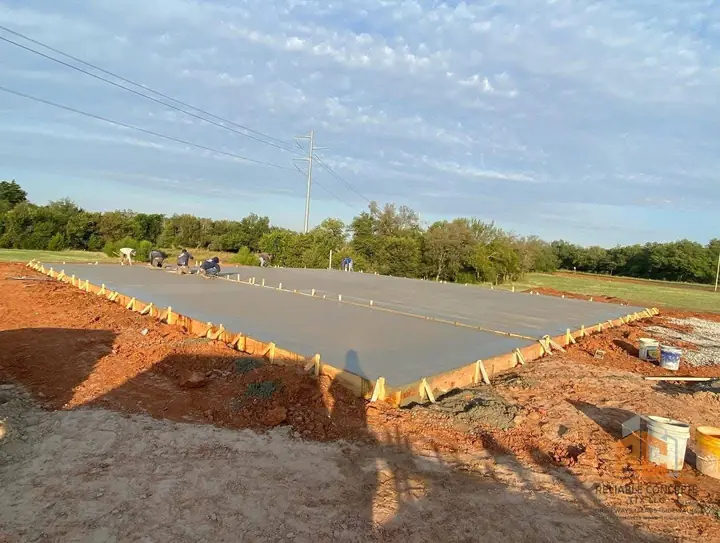
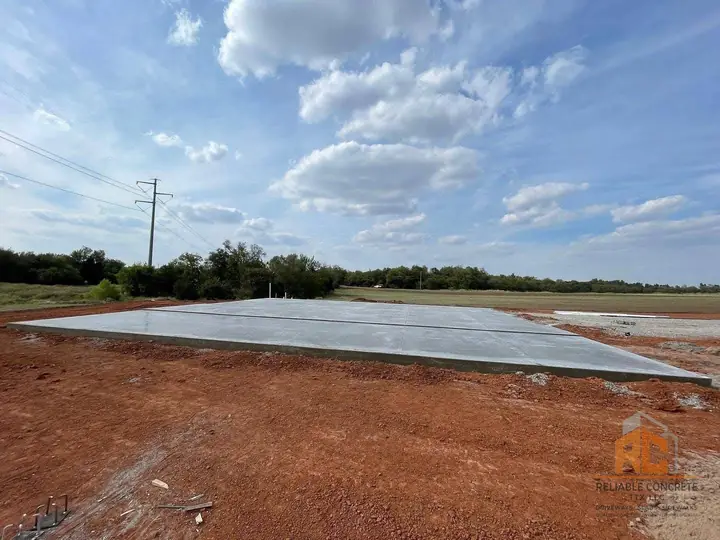
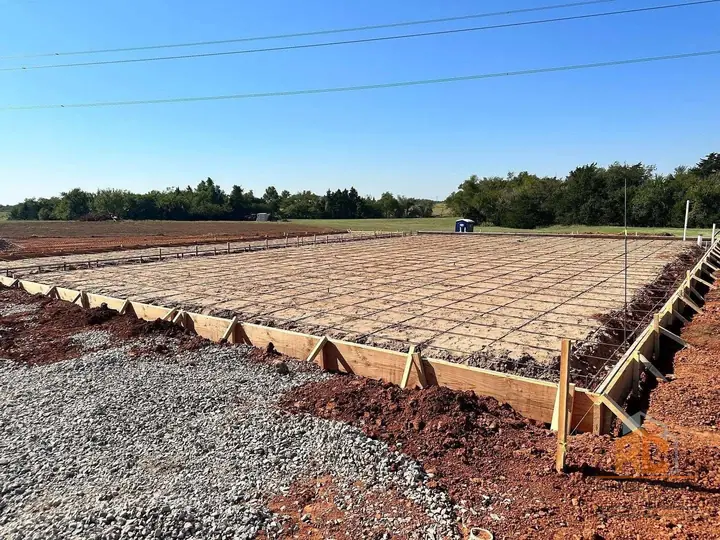
Questions we hear
Frequently asked
What kind of foundation do houses in Tyler use?
Most use a slab-on-grade foundation, often post-tensioned or heavily reinforced because of expansive clay. The engineer chooses the design for the lot.
How thick is a shop slab?
Light use often starts around 4 inches, while heavy trucks, equipment or a car lift call for more, plus thicker edges. It depends on what goes inside.
How long before building on a new slab?
Framing can often start within days, but concrete keeps gaining strength for about four weeks. Heavy loads wait longer.
Ready to talk about your concrete?
Let's get your project on solid ground.
Tell us what you need and we'll get back to you to talk it through and set up a time to look at the job.
Prefer to call?(903) 555-0100