Concrete repair · Tyler, TX
Concrete repair in Tyler, TX that fixes the cause, not just the crack
We repair concrete in Tyler, TX: cracked driveways, flaking and spalled surfaces, sunken patio and sidewalk slabs, trip hazards and broken sections. First we find out why it failed, because a patch over an active problem does not last.

Signs it needs attention
Your concrete is telling you something
- Cracks that are getting wider or have one side higher than the other
- A slab that has sunk and now holds water or slopes toward the house
- A flaking, pitted surface with stones showing through
- A lifted edge on a sidewalk that people trip on
Start with why it failed
Hairline cracks from shrinkage are cosmetic. Wide cracks, cracks with an offset, and sunken slabs usually point at the ground: clay that shrank in a drought, base that washed out under a downspout, or soil that was never compacted. Fixing the surface without fixing that only buys a season or two. Why concrete cracks and why it sinks.
Repairs we do
- Crack repair: cracks are cleaned out and filled with a flexible sealant or a repair compound, depending on whether they are still moving.
- Spalled and flaking concrete: loose surface is removed and patched, or the whole slab gets a resurfacing overlay if the damage is widespread.
- Sunken slab leveling: a settled patio, walk or driveway panel can often be lifted back into place by pumping material underneath, either a cement-based slurry (mudjacking) or polyurethane foam. Mudjacking vs. foam.
- Trip hazards: a lifted sidewalk edge can be leveled or ground down so it is flush.
- Section replacement: one or two broken panels are saw-cut out and repoured, tied to the slabs around them.
Fix it or start over?
Repair makes sense when the damage is limited to a few panels and the rest of the slab is sound. When cracks run through most of a driveway, the slab is crumbling, or it has sunk badly in several places, replacement is usually the better use of money. We will tell you honestly which side of that line you are on. Repair or replace a driveway?
Keep it from happening again
Many repairs come with a simple fix around them: extending a downspout, sealing joints so water cannot get under the slab, or regrading so the yard drains away from the concrete. Sealing also protects the surface from water and wear.
Done to standard
How we do it to standard
-
The fix lasts because the cause was fixed.
We find out why the concrete failed (water, washout, clay, roots, overload) before quoting the repair.
A patch over an active problem fails again. The cause usually costs less to fix than the repair.
-
The concrete you keep is untouched.
We saw-cut a straight line wherever removed concrete meets concrete that stays.
Breaking without a cut chips and cracks the slab you meant to keep.
-
The seam between old and new stays level.
We drill and dowel new concrete into old where they must move together, or set an isolation joint where they must move apart.
An extension poured against old concrete with nothing between them cracks or steps at the seam within a season or two.
-
You spend on the option that lasts.
We tell you plainly when a slab is past repairing and when it is not.
Repeated repairs on a failed slab cost more than replacing it. Replacing a sound slab wastes money the other way.
-
Built for the ground it actually sits on.
We treat East Texas clay as a design condition: base, steel, joints and drainage are sized for ground that swells wet and shrinks dry.
Expansive clay moves with the seasons. Concrete that ignores that movement cracks along lines nobody chose.
Standard Texas engineers measure clay movement as potential vertical rise (PVR), using the TxDOT Tex-124-E method.
-
The right lift, or an honest no.
We explain mudjacking and foam leveling for the slab in front of you, and when neither will work.
Lifting works on a sound slab that settled. It does not fix a slab that is broken through.
Step by step
How a repair job goes
-
Look at it
Find the damage and the cause behind it.
-
Pick the fix
Fill, level, patch, resurface or replace.
-
Do the repair
Prep, repair and cure.
-
Stop the cause
Drainage, joint sealing or grading where needed.
Know the words
Terms you'll hear
- Spalling
- Chunks or flakes breaking off the concrete surface. Usually water and a weak surface. Small spots get patched, widespread spalling gets resurfaced.
- Trip hazard
- A height difference between slab sections. It can be ground flush or the slab leveled, depending on the cause.
- Mudjacking
- Lifting a sunken slab by pumping slurry under it. It saves a sound slab that settled. It does not fix a broken one.
- Foam leveling
- Lifting a sunken slab with injected polyurethane foam. Small holes and fast use. Same limits as mudjacking.
- Expansive clay
- Clay that swells when wet and shrinks when it dries. It is the main reason East Texas concrete cracks, heaves and settles.
- Dowel bars
- Short steel bars drilled and epoxied into an existing slab to tie new concrete to it. They keep new and old concrete level with each other at the seam.
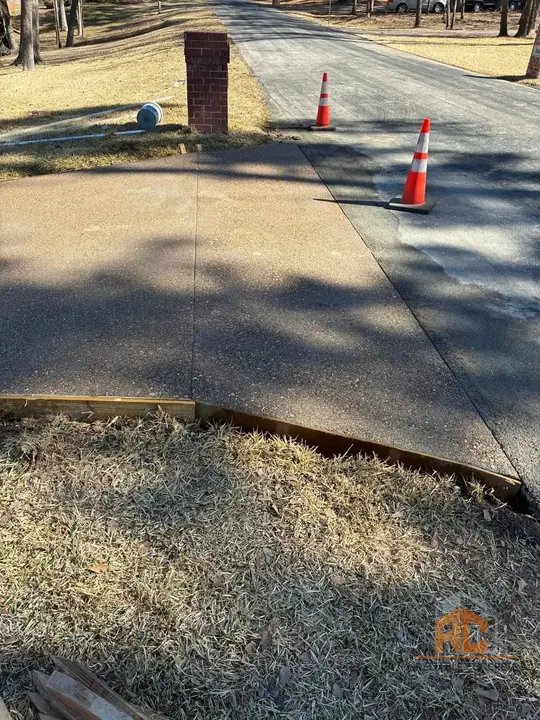
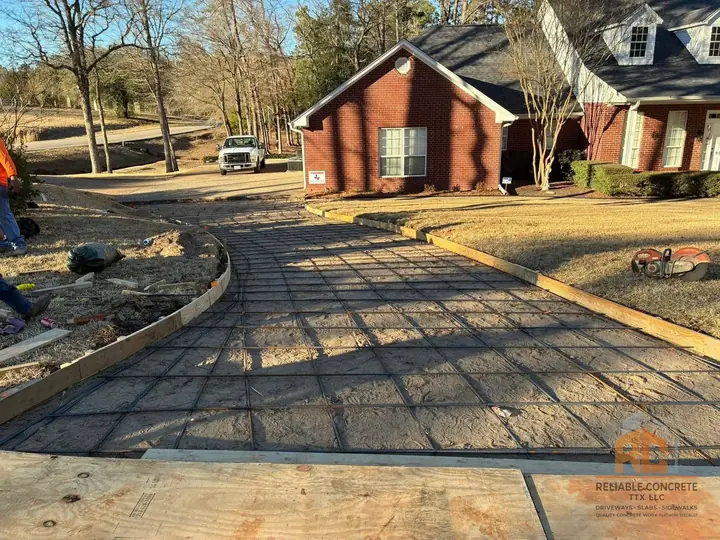
From our recent work
More photos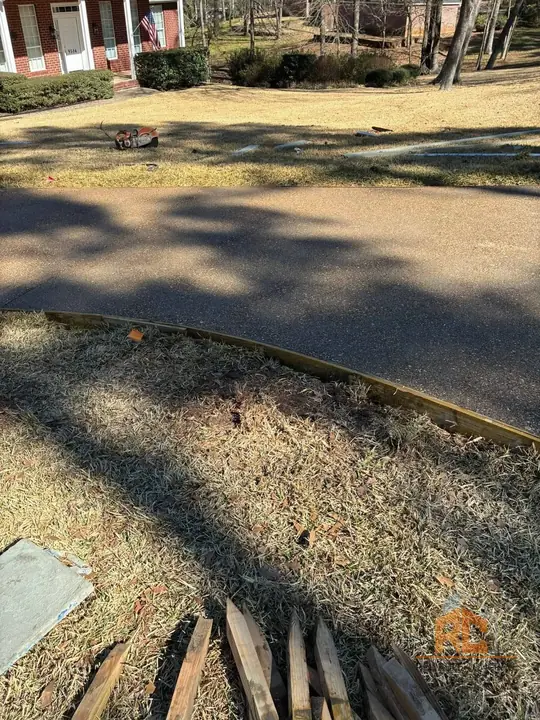
Questions we hear
Frequently asked
Can cracked concrete be resurfaced?
If the cracks are stable and the slab is sound, yes, after the cracks are repaired. Active cracks will come back through an overlay. More on this.
Is mudjacking or foam better?
Both lift sunken slabs. Foam is lighter and uses smaller holes, and mudjacking uses a cement-based slurry. Compare them.
Will a repaired crack show?
Usually, yes. Repaired cracks are rarely invisible, but they stop water getting under the slab, which is the real goal.
When is a driveway not worth repairing?
When most panels are cracked, sunken or crumbling. At that point repairs cost more over time than a new driveway. About new driveways.
Will new concrete match my old concrete?
New concrete is lighter at first and never matches exactly. It evens out with age.
Ready to talk about your concrete?
Let's get your project on solid ground.
Tell us what you need and we'll get back to you to talk it through and set up a time to look at the job.
Prefer to call?(903) 555-0100