
Stamped concrete · Tyler, TX
Stamped concrete in Tyler, TX with the look of stone, brick or slate
Stamped concrete in Tyler, TX gives a patio, walkway or entry the look of stone, slate, brick or wood plank while staying one solid slab. We pour it, color it, press the pattern in while it is still plastic, then seal it.
Is it right for you?
You want more than plain gray
- You like the look of stone or pavers but not the weeds and sinking
- A patio or entry is the first thing guests see
- You want color that matches brick, stone or trim on the house
- You are pouring new anyway and want it to look finished
How stamped concrete is made
The slab is prepared and poured the same way as any patio, with base, steel and slope. The difference starts once it is placed. Color goes in, either mixed into the whole load (integral color) or broadcast on the surface as a color hardener. A release agent goes down so the stamps do not stick and to add a second, accent tone.
Then the crew presses textured mats into the surface at just the right stage of set. Too early and the pattern slumps. Too late and it will not take. Timing is the whole skill, which is why stamping goes slower in a Tyler summer, when concrete sets fast.
Patterns and colors
Common patterns include ashlar slate, cobblestone, random stone, running bond brick and wood plank. A border in a contrasting pattern or color frames a patio and hides the edge forms. We will show you samples and talk through what suits your house before the pour.
What upkeep to expect
Stamped concrete is sealed after it cures, and that sealer is what keeps the color rich and the surface protected. Plan on resealing every two to three years, sooner on a sunny pool deck. A worn sealer is the most common reason stamped concrete looks faded. About sealing.
Sealed stamped concrete can get slick when wet. A grit additive in the sealer adds grip, and we recommend it around pools and on steps.
Stamped concrete vs. pavers
Pavers can be lifted and reset one at a time. Stamped concrete cannot, but it has no joints for ants, weeds or sand to wash out of, and it does not settle unevenly the way pavers on a poor base can. Like any slab, it can crack, and control joints are cut into the pattern lines to hide them.
Done to standard
How we do it to standard
-
A crisp pattern across the whole slab.
We stamp at the right stage of set with enough crew and mats to finish the pour before it gets away.
Stamp too early and the pattern slumps. Too late and it will not take. In summer the window is short.
-
Good looking and safe when wet.
We add a slip-resistant grit to sealer around pools, on steps and on sloped stamped surfaces.
Sealed stamped concrete can be slick when wet. Grit fixes most of that without changing the look.
-
Cracks go where we put them.
We lay out control joints by slab thickness and shape, and keep panels close to square.
Concrete shrinks as it cures and will crack somewhere. Joints decide where, so the crack lands in a straight line instead of across the middle of a panel.
Standard ACI 302.1R and the Portland Cement Association put joint spacing at about 24 to 36 times the slab thickness (8 to 12 feet for a 4-inch slab).
-
The color you picked is the color you get.
We show color and pattern samples and get your choice in writing before ordering.
Concrete color looks different on a chart, wet and cured. Agreeing up front avoids surprises.
Standard ASTM C979 covers pigments for integrally colored concrete.
-
Crack control you cannot see.
We cut control joints along the pattern grout lines.
Joints are still needed in stamped concrete. Put in the pattern lines, they disappear.
-
Summer concrete that cures instead of drying out.
We pour early in the day in summer, keep materials and the base cool and damp, and protect the surface from drying wind and sun.
In a Tyler summer, the surface can lose water faster than the concrete can set, which leaves shrinkage cracks and a weak, dusty top.
Standard ACI 305R (Guide to Hot Weather Concreting) recommends precautions when the evaporation rate approaches 0.2 lb per square foot per hour.
Step by step
How a stamped job goes
-
Pick the look
Pattern, base color and accent color from samples.
-
Prep and pour
Grade, base, forms and steel, then the pour.
-
Color and stamp
Color, release, and the pattern pressed in at the right set.
-
Wash and seal
Excess release washed off, joints cut, sealer applied.
Know the words
Terms you'll hear
- Integral color
- Pigment mixed into the whole concrete load. Color runs all the way through, so chips and wear do not show gray.
- Color hardener
- Powdered color broadcast on the surface of fresh concrete and troweled in. Gives deeper color and a harder surface than integral color alone.
- Stamping mats
- Polyurethane mats pressed into fresh concrete to imprint a pattern. Enough mats and crew decide whether the pattern stays consistent across the whole pour.
- Drying shrinkage cracks
- Cracks from concrete shrinking as it cures and dries. Normal and expected. Joints are there to catch them.
- Cloudy sealer
- A sealer that turned white or cloudy. Usually moisture trapped under it or too thick a coat.
- Construction joint
- Where one day's pour meets the next. Done right, it is keyed or doweled. Done wrong, it is the first crack.
From our recent work
More photos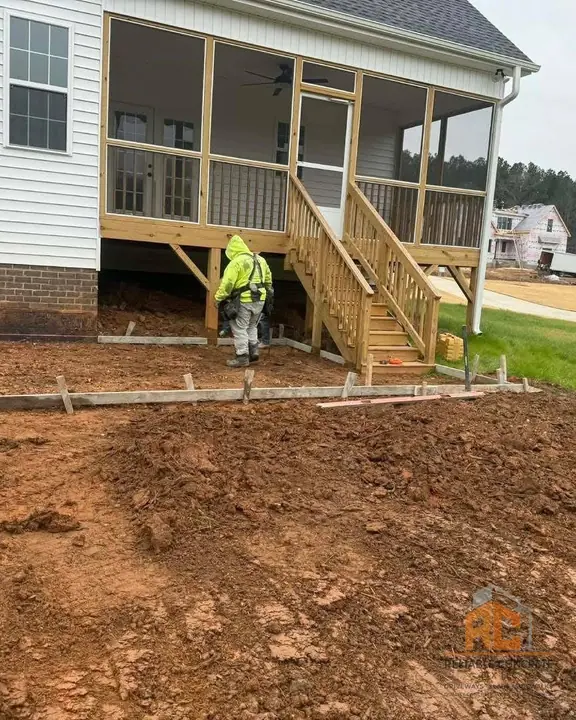
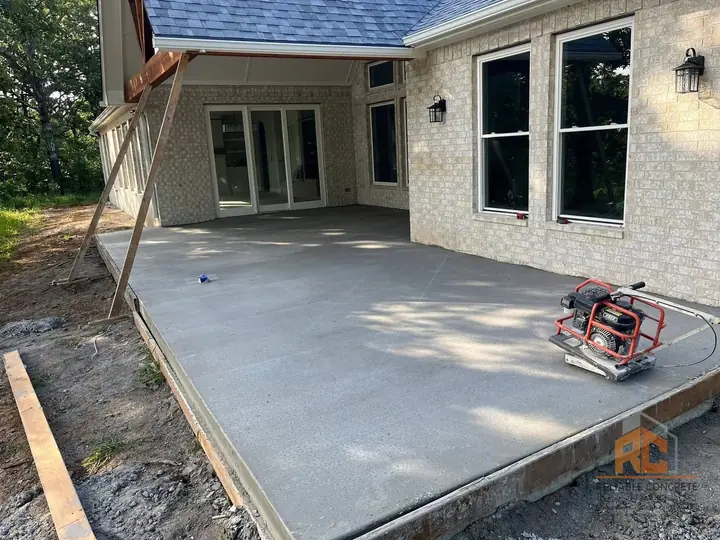
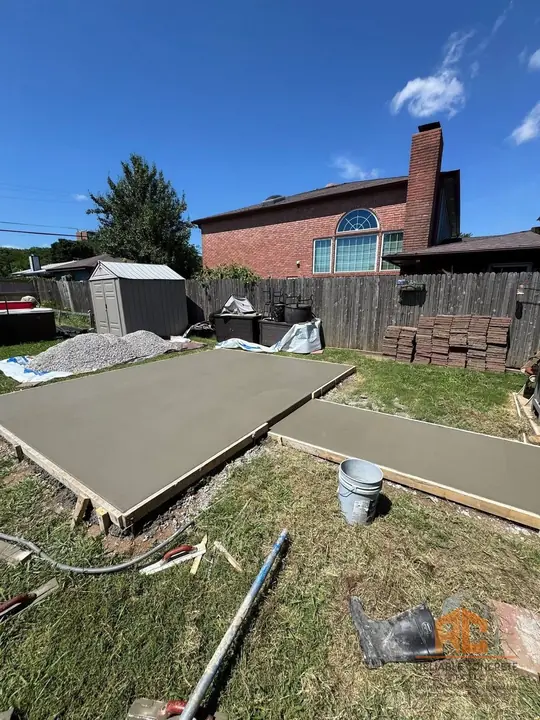
Questions we hear
Frequently asked
Does stamped concrete crack?
It can, like any slab. Good base and steel keep cracks small, and joints are cut along pattern lines so they blend in.
Is stamped concrete slippery?
Sealed concrete can be slick when wet. Adding grit to the sealer fixes most of that, and it is worth doing near pools and on steps.
Can you stamp my existing patio?
Not by stamping, since the pattern is pressed into fresh concrete. A textured overlay can give an old, sound slab a similar look. About resurfacing.
How much more does stamped cost than plain?
Stamping adds color, release, tools, sealer and a lot more labor at the finishing stage, so it costs noticeably more than broom-finished concrete. We price both so you can compare.
How often does concrete need resealing?
Film sealers on stamped concrete usually every two to three years. Penetrating sealers last longer.
Ready to talk about your concrete?
Let's get your project on solid ground.
Tell us what you need and we'll get back to you to talk it through and set up a time to look at the job.
Prefer to call?(903) 555-0100